.svg)
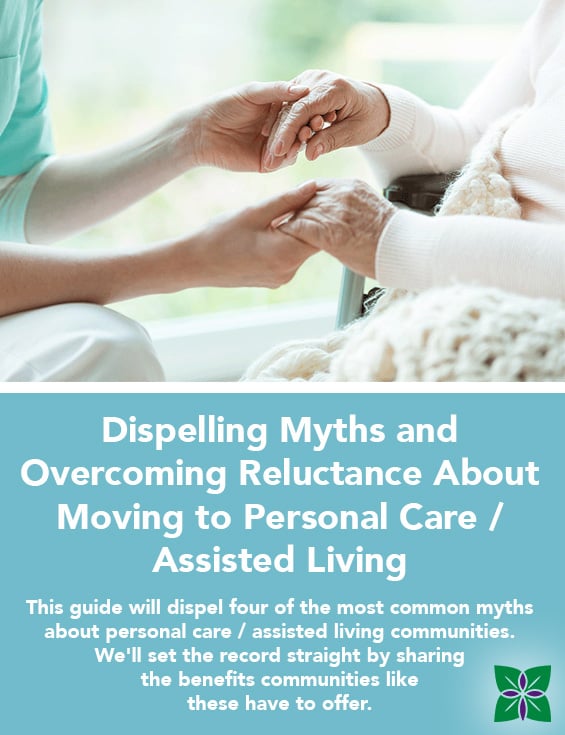
Dispelling Myths and Overcoming Reluctance About Moving to Personal Care / Assisted Living
This guide will dispel four of the most common myths about personal care / assisted living communities. We'll set the record straight by sharing the benefits communities like these have to offer.

The myths about personal care/ assisted living communities are numerous and varied. Because some are so widely believe, it might result in a person being reluctant to make a change that could actually improve their quality of life. While there are many outdated ideas and misconceptions about this type of senior living, some are more persistent and damaging than others.
Read the full guide below! Or you can also fill out the form for a downloadable PDF version of the guide you can reference later.

Chapter
Myth 1: You'll Sacrifice Independence and Privacy


Chapter
Myth 2: Personal Care is Expensive and Unaffordable

Personal Care and Assisted Living Costs

Fact: Older adults and their families often think the most cost-effective housing option is to remain at home. While this misconception is easy to understand, it's definitely not accurate.
Even when a person's mortgage is paid in full, there are many more expenses associated with home ownership and agin in place in a private residence. Here are some things to consider:
- Property taxes
- Homeowner's insurance
- Utilities, internet and cable
- Appliances, including repairs and replacement
- Household maintenance (i.e. roof, furnace, air conditioner)
- Lawn care and snow removal services
Beyond the maintenance of a home, as a person's health declines, there are often additional expenses a family may encounter. In-home care is one. This support is frequently utilized to help an older adult take a shower, grocery shop, prepare meals, plan menus, manage continence care or to perform tasks a family caregiver might be struggling with.
Another potential cost to be mindful of is the need for home modifications. Wider doorways, step-free showers, grab bars and ramps are a few of the common changes that are often required to allow a person to safely age in place in a private home. Depending on the area of the country in which you live and how extensive the modifications might be, these expenses and be significant.

Here are some of the amenities and services that are included in a personal care / assisted living resident's month fee:

- Three nutritious meals each day
- Around-the-clock caregivers
- Utilities and basic cable televisionm
- Daily activities and wellness programs
- Scheduled transportation services
- Housekeeping and maintenance
Don't overlook financing options that may make this type of senior living even more affordable. Here are a few programs to discuss with the team at any of the communities you are considering:
- Applying for the Aid & Attendance Benefit for veterans and spouses
- Utilizing a senior's long-term care insurance, if applicable
- Working with a life settlement company to sell a life insurance policy
- Security a short-term bridge loan to liquidate assets at the most beneficial time
When you factor all of this into the equation, it's easier to understand how this value-based living option is worth considering.
Chapter
Myth 3: Residents Must Participate in Activities

Residents Choose Their Activity Level

Chapter
Myth 4: Personal Care Communities are Uninviting

Today's Personal Care Communities are Warm and Welcoming
Fact: This myth is easy to overcome with a visit to a personal care / assisted living community. You'll quickly notice the vibrant, engaged lifestyle residents enjoy during your tour. Today's senior communities are far from being depressing or uninviting.

Visitors typically see both formal and informal resident gatherings happening all around the campus. It might be friends laughing over a cup of coffee in the dining room or a morning exercise group starting the day off right.
You'll also observe that team members and residents know and greet one another by name. They ask about one another's lives and families are are invested in one another's health and happiness. It creates the type of environment that makes people feel at home.
Chapter
Conclusion


Ready to learn more? The best way to do that is by calling a PSL community in your desired location to schedule an in-person visit. You'll have a chance to tour the campus, meet residents and team members and have all your questions answered.
Click the link below to learn more about Personal Care and Assisted Living at PSL and find a location near you.