.svg)


Falls are a leading cause of both fatal and nonfatal injuries among older adults. According to the National Council on Aging and the Centers for Disease Control and Prevention, one in four adults over the age of 65 experiences a fall every year.
That’s a frightening statistic for seniors and those who love them. But the good news is that many falls are preventable. Building simple, consistent habits into your daily routine can significantly reduce your risk.
The best way to support fall prevention for seniors is to stay physically active, improve balance, create a safe home environment, review medications and build consistent daily habits that reduce fall risk. These simple habits can help reduce fall risk in older adults, lower the likelihood of injury over time and support long-term independence.
What Helps Prevent Falls in Seniors?
In no particular order, here are nine everyday habits that support fall prevention for seniors by improving balance, strength and overall safety
Explored more in-depth below, these key strategies falls can help prevent falls:
- Staying active to reduce fall risk
- Practicing balance exercises
- Improving home safety to prevent falls at home for older adults
- Wearing supportive, non-slip footwear
- Reviewing medications regularly
Stay physically active to improve strength and balance
Regular movement plays a key role in fall prevention for seniors by strengthening muscles, improving coordination and enhancing balance. Activities like walking, stretching, swimming, or light strength training help keep your body responsive and stable. Even short daily sessions can make a meaningful difference over time.
Life Plan communities encourage physical activity and offer education on healthy food choices and physical exercises for a healthy lifestyle. Physical wellness follows the principle of encouraging individuals to strive to spend time building physical strength, flexibility and endurance to promote overall wellness.
Here are some ways these communities can provide the resources and guidance needed to stay fit all year long:
- Professional instructors: Fitness classes are widely available and led by instructors who specialize in senior health and wellness. They can provide valuable guidance in performing low-impact exercises. They also understand the unique needs of older adults and can create personalized fitness plans that focus on mobility, strength, and flexibility.
- Adaptive equipment: For seniors with physical challenges, adaptive equipment can make a world of difference. Resistance bands, light dumbbells, and stability balls are just a few examples of tools that can assist seniors in performing low-impact exercises. Senior living communities often provide access to such equipment, allowing residents to participate in a variety of activities in a comfortable, supportive environment.
Practice balance exercises to prevent falls
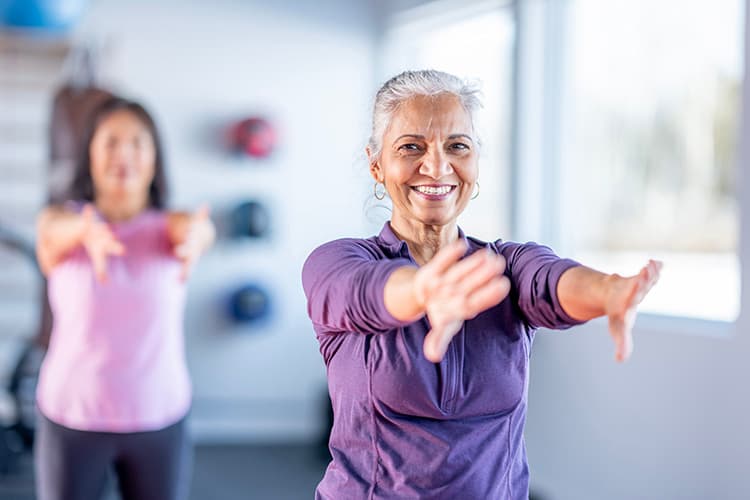
Simple balance exercises for seniors, such as standing on one foot, heel-to-toe walking, or gentle yoga, can improve stability and coordination. Working these types of balance exercises into your day trains your body to react better if you stumble, so you can regain your balance instead of falling.
Wear proper footwear for stability
Choose shoes with nonslip soles, good support, and a proper fit. Avoid walking around in socks, loose slippers, or worn-out shoes, as they increase the risk of slipping or tripping.
Keep your home clutter-free
Everyday items like cords, shoes, or bags left on the floor can become tripping hazards. Keeping walkways clear is one of the most effective ways to prevent falls at home for older adults. Make it a habit to tidy up regularly and ensure walkways are clear, especially in high-traffic areas.
Improve lighting to reduce fall hazards
Proper lighting is one of the most effective senior home safety tips for fall prevention, indoors and out. Make a habit of turning on lights as you enter a room. Also, use night-lights in hallways, bathrooms, and other areas of the house you may walk through at night. Being able to clearly see where you’re going greatly reduces risk.
Stand up slowly to avoid dizziness
Standing up too quickly can cause dizziness or lightheadedness, which may lead to a fall. Pause for a moment after sitting up, then stand and steady yourself before walking.
Stay hydrated and maintain nutrition
Proper hydration and nutrition play an important role in reducing fall risk in older adults, as weakness and fatigue can increase instability. Drinking enough water and maintaining a balanced diet supports muscle function and energy levels, helping you stay steady on your feet.
Retirement communities understand that residents have diverse dietary needs and preferences. Healthy, delicious meals are a cornerstone of overall well-being. At PSL, our culinary teams take pride in providing a dining experience that combines nutrition, taste and social enjoyment. These teams emphasize seasonal ingredients, local sourcing, and menu options that accommodate a range dietary needs and preferences.
At Westminster Woods, Huntingdon, PA, the dining team hosts a monthly Healthy Living Cooking Class for residents. During each session, Robert, the Assistant Director of Dining Services, demonstrates meal preparation for a healthy, themed meal. Following his demonstration, residents enjoy the taste treat and receive copies of the recipes he prepared.
.jpg?width=750&height=247&name=Wellness%20Cooking%20Class%20at%20Westminster%20Woods%20Senior%20Living%20(1).jpg)
Use assistive devices for safety
For independent older adults, this can be tough. But canes, walkers, and handrails are not signs of weakness—they are tools that help keep you safe. If you feel unsteady, using support can help reduce fall risk and increase your confidence while moving.
Review medications that increase fall risk
Some medicines can increase fall risk due to side effects such as dizziness or drowsiness. Make it a habit to check with your healthcare provider or pharmacist to understand how your prescriptions might affect your balance.

Why Fall Prevention Matters for Older Adults
Incorporating these habits into your daily life doesn't require drastic changes, but the impact can be significant. Fall prevention for seniors is about consistency; small actions done regularly can build strength and awareness and make your environment safer. By staying active, alert and proactive, you can greatly reduce your risk and maintain independence and confidence in your everyday movement.
Frequently Asked Questions about Fall Prevention for Seniors
How Your Home Environment Can Reduce Fall Risk for Seniors
If you are a senior residing in an older house, modifying it to create a safe environment might be difficult, as the costs can often be prohibitive. One solution to aging in place to consider is a move to a life plan community. You’ll find housing options designed with senior living safety features such as accessible layouts, proper lighting, and built-in support systems that help reduce fall risks.
We invite you to call a PSL community near you to learn more!