.svg)



Updated from the original publication on March 5, 2020.
How Can Seniors Improve Balance and Prevent Falls?
Quick Answer: Seniors can improve balance and reduce fall risk through simple daily exercises like standing on one foot, leg raises, and strength training. Consistency, safe support (like a chair), and regular movement are key to maintaining stability and confidence.
Balance exercises for seniors are one of the most effective ways to improve stability, build strength and reduce the risk of falls. With simple, consistent movement, it's possible to maintain confidence and independence at any age.
Why Fall Prevention and Balance Matter More Than Ever
A sudden loss of balance can happen in a moment - but the fear of falling often lingers much longer. Many older adults say that fear alone changes how they move through daily life.
According to the National Council on Aging, one in four adults aged 65+ experiences a fall each year, making fall prevention a critical part of healthy aging. As the body changes over time, muscle strength, joint flexibility, vision and reaction time naturally decline. These shifts can make balance less steady and increase the likelihood of a fall.
Why Balance Exercises are Important for Healthy Aging
Balance is the foundation of nearly every moment, from walking and standing to reaching and turning. When balance declines, everyday tasks can feel less stable.
Poor balance can:
- Increase risk of falls and related injuries
- Impact mobility and independence
- Lead to hesitation or fear of movement.
Over time, even the fear of falling can cause someone to move less, which can further reduce strength and stability. That's why practicing balance exercises for seniors is not just about physical health. It also supports confidence and quality of life.
Simple Balance Exercises for Seniors
There's no way to stop the natural aging process, but regular movement can maintain - and improve - balance over time. These balance exercises for seniors are simple, effective and can be adapted to different ability levels.
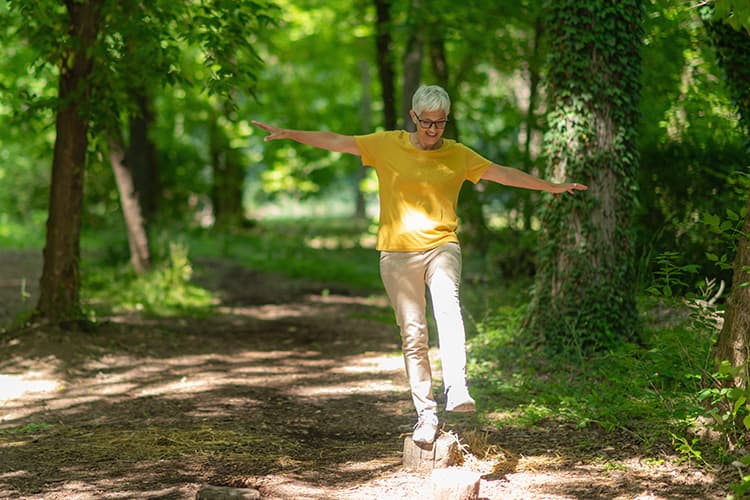
Standing On One Foot
This foundational exercise helps improve stability and awareness of your center of gravity.
How to do it:
- Stand on one foot behind a sturdy chair, holding on for balance.
- Life one foot and balance of the other
- Hold position for up to 10 seconds (or as long as feels steady)
- Repeat 10-15 times, then switch legs
Progression tips:
- Start with holding both hands on chair for support.
- Gradually reduce to one hand, then one finger
- When ready, try without holding on
- If you are really steady on your feet, try doing the balance exercises with your eyes closed
Leg Raises for Strength and Stability
Strengthening the. lower body helps support better balance.
Back Leg Raises
- Stand behind a chair for support
- Slowly lift one leg straight back (keep posture upright)
- Hold briefly, then lower
- Repeat up to 15 times per leg
Side Leg Raises
- Stand tall and lift one leg out to the side
- Keep toes facing forward and back straight
- Hold briefly, then lower
- Repeat up to 15 times per leg
These fall prevention exercises target the hips, thighs and lower back, key areas for stability.
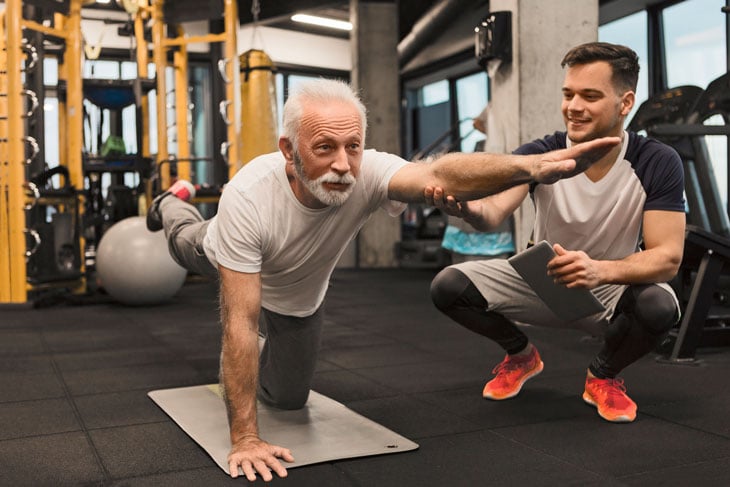
How Often Should Seniors Practice Balance Exercises?
Consistency matters more than intensity.
- Balance exercises (like standing on one foot) can be done daily
- Strength exercises (like leg raises) should be done 2-3 times per week
- Avoid doing strength exercises on consecutive days to allow muscles to recover
Incorporating additional activities - walking stretching or gentle yoga - can further support strength, flexibility and coordination.
Building Confidence Through Movement
Regular exercise is about more than physical strength. Over time, it can help:
- Improve mobility and coordination
- Increase confidence with everyday movement
- Support continued independence
Even small efforts - done consistently - can lead to noticeable improvements.
How Senior Living Communities Support Balance and Fitness
Maintaining balance and stability becomes easier in the right environment with consistent opportunities for movement. In many life plan communities, wellness is built into everyday routines that support both safety and independence.
Structured fitness programs for seniors often include balance exercises, strength training and guided movement classes designed to improve stability over time. These programs are typically led by trained team members who understand how to adapt exercises for different ability levels.
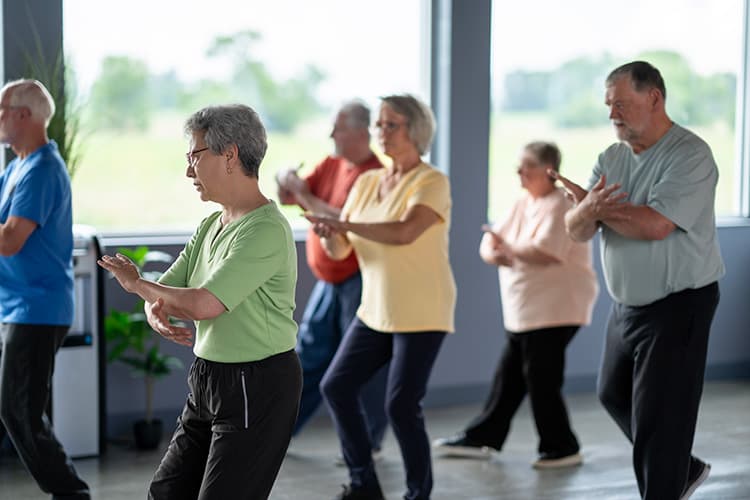
In addition, many communities - including those within Presbyterian Senior Living - have incorporated an emerging approach called functional fitness into their wellness offerings. This type of training focuses on movements that support everyday activities, such as standing from a seated position or reaching overhead. By practicing these real-life motions regularly, individuals can build strength, improve coordination and feel more confident in everyday movement.
Take the First Step Toward Better Balance
Strengthening balance doesn't require complicated routines. All it needs is consistent, intentional movement. Starting with a few simple exercises can help support stability, confidence and day-to-day independence over time.
For additional guidance, download this senior-friendly fitness blog! It can help identify safe, effective options to stay active and supported.
Disclaimer: This content is for informational purposes only and is not intended as medical advice. Always consult with a healthcare provider before starting any new exercise program, especially if you have existing health conditions or concerns about balance or mobility.